September 15-16: Independence Day Celebration

img_8421

ENGLISH

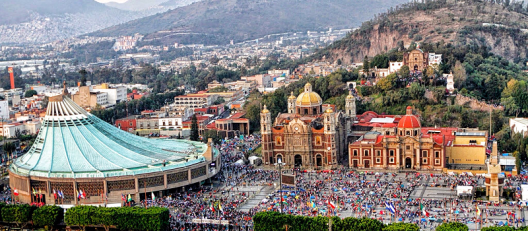
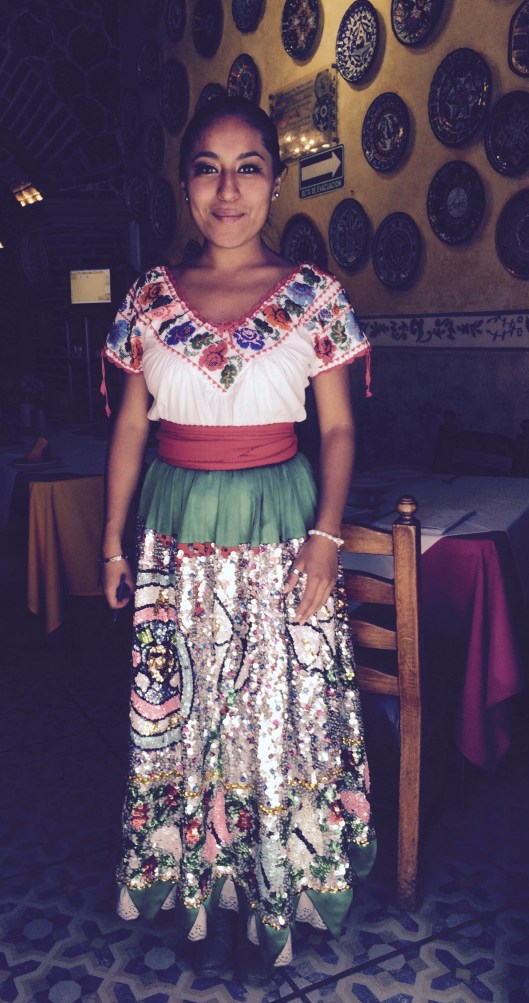
Today’s date is September 15, 2016 and there is a bright full moon that can be seen from any corner of the world! Today Mexico, the largest Spanish-speaking country in the world begins to celebrate its 206 Independence Day anniversary. China with the largest population in the world is also celebrating…The Mid Autumn Festival (which every year is celebrated on a different date based on the lunar calendar). Every 19 years, the moon repeats its “lunar phases”, so back in 1997 when I moved to China I celebrated on September 15, 1997 my “first Mid Autumn Festival” and at the same time my new Chinese friends celebrated Mexico’s Independence Day with me. For Chinese people a “Full Moon” symbolizes the “getting together” of friends and family. The next time for both countries to coincide and celebrate on September 15 will be in the year 2035! I hope to see many Chinese ladies celebrating in Mexico dressed as “Chinas Poblanas” (our National Dress)!

Version 2

ESPAÑOL

Hoy 15 de septiembre del 2016 hay una gran luna llena que se puede apreciar desde cualquier rincón del mundo. Además, coincide que en México hoy se inician las celebraciones del 206 aniversario del inicio de la Independencia de nuestro país y justo este mismo día, en China también hay una celebración….pero allá se conmemora la Fiesta del Medio Otoño (celebrada cada año en diferente mes pues la fecha depende del calendario lunar). Sin embargo, cada 19 años México y China celebran el 15 de septiembre sus respectivas fiestas. Cuando yo llegué a China en agosto de 1997, me tocó celebrar allá las dos fiestas, pero en aquella ocasión fueron mis amistades chinas las que conocieron sobre esta agradable coincidencia de festejos entre México y China, donde los corazones de las poblaciones del país hispanohablante mas grande del mundo y el país mas poblado del mundo, vibran al unísono. Para los chinos la luna llena simboliza la “unión” entre los amigos y la familia. La próxima ocasión en que México y China festejarán juntos el 15 de septiembre será en el año 2035. ¡Ojalá y veamos en nuestro país a muchas turistas chinas vestidas de “Chinas Poblanas”!

img_6374


Multicultural TV Shows in Mexico

mochila_al_hombro-2

ENGLISH

In 1997 when I left Mexico to live in Asia there were only a couple of Cultural & Educational TV Channels in the country. However, Mexico’s first travel show MOCHILA AL HOMBRO (Carrying your Backpack) trigger around the world the production of other Travel Shows and even Travel TV Channels! Nineteen years later Mexico has quadrupled its amount of Cultural & Educational TV Channels supporting the appreciation of domestic and international cultural diversity! Some TV Shows such as LA LLEVA (Taking you to…) promotes domestic travel amongst Mexican children who visit other children in order to appreciate and learn from other regional cultures. It also promotes friendship and the “opening of minds” to enrich the children’s mindset. There are also TV Shows such as ¿PORQUE EN MEXICO? (Why in Mexico?) in which foreigners are interviewed seeking to understand the reasons they have chosen Mexico as their home. This TV show along with LOS QUE LLEGARON (Those who arrived) reveal the appreciation foreigners have about Mexican lifestyle, Mexican Culture and the gifts Mother Nature has given Mexico with is huge variety of climates! Another type of TV show is that in which the life experiences of Mexicans living abroad is introduced such as LA LISTA DE ERICK (Erick’s Bucket List). Erick is a Mexican theater-actor who explores many regions in Russia and introduces Russian culture to the TV audience by connecting directly with the Russian people in each region. There is no doubt that today Cultural & Education TV Channels in Mexico promote both Domestic and International Multiculturalism!

los-que-llegaronESPAÑOL

En 1997 cuando dejé México para irme a vivir en Asia habían muy pocos canales de televisión educativos. Sin embargo, México fue el primer país en lanzar un programa de televisión que promovía los viajes por el interior del país: MOCHILA AL HOMBRO mismo que detonó a nivel mundial los programas y canales de viajes. Diecinueve años después, México cuenta con 4 veces mas canales educativos que antes y, además existe una apreciación y valoración de la diversidad cultural tanto indígena y nacional como extranjera. Hay algunos programas que promueven los viajes entre los niños de México tal como LA LLEVA en donde niños mexicanos visitan a otros niños mexicanos conociendo sus costumbres, promoviendo la amistad e invitándolos a enriquecer su manera de ver el mundo. También hay programas de televisión tales como ¿PORQUE EN MEXICO? en donde se entrevista a extranjeros que han decidido vivir en México. Este programa al igual que LOS QUE LLEGARON revela la razones de algunos extranjeros que han escogido México como su hogar, valorando la forma de vida de nuestro país y apreciando las variedad climatológica que nuestro territorio recibe por parte de la Madre Naturaleza. Otro tipo de programas de la nueva televisión educativa es aquel que describe la vida de algunos mexicanos en el extranjero tal como LA LISTA DE ERICK donde el protagonista describe las aventuras que vive para conocer Rusia a mayor profundidad! No cabe duda que en México hoy en día hay una variedad muy interesante de programas que promueven la Multiculturalidad!

lista-de-erick

Quetzalcoatl: The Wisdom Dragon

img_8731ENGLISH

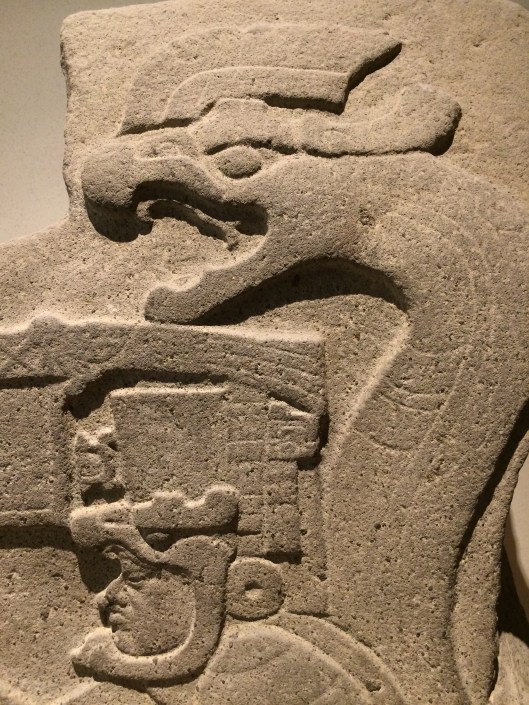
A giant feathered serpent in many Mesoamerican cultures represents Quetzalcoatl, which in the Maya world it is known as Kukulkan. This giant feathered serpent resembles the dragons of Asian and European myths. Quetzalcoatl even manifests itself in the wind and water like Asian dragons but it doesn’t exhale fire like some European dragons do.

The oldest image of Quetzalcoatl recorded is the one appearing in Monument 19 at the Anthropology Museum in Mexico City. It belongs to the mother culture of Mexico: The Olmec, and it is around 2-3 thousand years old!

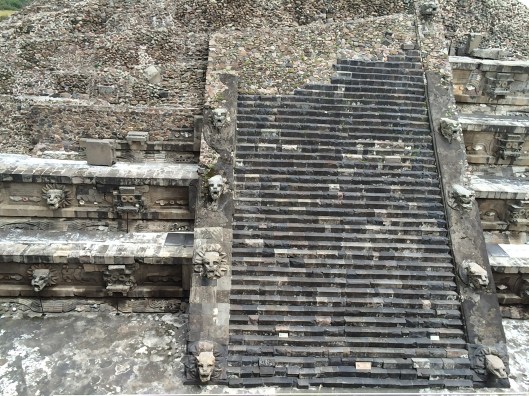
Teotihuacan, the largest archeological site in Mexico, has a large pyramid dedicated to Quetzalcoatl (the God of Storms…wind & water).

The most interesting “connection” between Asian and Mesoamerican “dragons” is that in both cultures they represent “Wisdom”.
img_8836ESPAÑOL

Quetzalcóatl, la gran serpiente emplumada de las culturas mesoamericanas también conocida como Kukulkán en la cultura Maya, tiene mucha similitud “física” con los dragones mitológicos asiáticos y europeos. De hecho Quetzalcóatl cuenta con manifestaciones relacionadas con el viento y el agua tal y como sucede con los dragones asiáticos y algunos dragones europeos, que además de volar, algunos hasta lanzan fuego.

La imagen mas antigua que se conoce de Quetzalcóatl tiene entre dos mil y tres mil años de aniguedad y es la que aparece en el monumento 19 de la cultura madre de México: la cultura Olmeca localizada en el Museo de Antropología de la capital mexicana.

Además, en Teotihuacán , “Lugar de los Dioses” también conocido como el “Lugar de las Tormentas”, hay una pirámide dedicada en su honor.

Algo realmente interesante es que para los asiáticos y para los antiguos mesoamericanos los dragones y las serpientes emplumadas simbolizan “La Sabiduría”.

img_9092

Multicultural Mexico: Modern Era

soy-puro-mexicano

ENGLISH

In 1942 Emilio “El Indio” Fernandez directed a movie called “Soy Puro Mexico” (I am a Pure Mexican). But what does being a “Pure Mexican” mean? Jose Vasconcelos, Mexico’s Minister of Education from 1921-24 wrote a book called “La Raza Cosmica” (The Cosmic Race) where he described a Mestizo (mixed-race) Mexican as a child coming from a “Spaniard and Indigenous” couple. Many Mexicans, including myself, grew up with this concept. However, Spain and Mexico have always had a diverse population! Spain had the presences of Arabs during approximately 800 years and Mexico has indigenous people that range from the tall Raramuri Indians in northwest Mexico to the “Asian” looking Maya Indians in southeastern Mexico. Mexico also has a “Third Root”, the African population that arrived during the 16th Century. So there is no doubt that Mexico’s population is Multiethnic going beyond the traditional concept of “Spanish and Indigenous”. As a matter of fact, last year I did a DNA test to discover my ancestry and the results were enlightening! My genes come from: Asia 2%, Africa 5%, the Americas 28% and Europe 65% (besides Spain, my genes also came from far away places like Finland & Russia!). There is no doubt that under our “tanned skin”, Mexicans carry genes that go beyond Spanish & Indigenous bloods! During the last 400 years Mexico has truly been a “Melting Pot”!

Multicultural Mexico.jpgESPAÑOL

La famosa película “Soy Puro Mexicano” dirigida en 1942 por Emilio “El Indio” Fernández lleva en su título la palabra “puro”. ¿Pero a que se refiere ser “puro mexicano”. José Vasconcelos, Secretario de la Educación Pública de 1921-1924 introdujo en su libro “La Raza Cósmica” que el mestizo mexicano provenía de la mezcla del indio y el español. Al igual que yo, muchos mexicanos crecimos con este concepto pero creo que “ser mexicano” va mucho mas allá de ser descendientes de los indígenas y españoles pues desde el siglo XVI la raza africana también ha estado presente en nuestro país. Además, los españoles históricamente vienen de una mezcla entre visigodos, bereberes, árabes, etc., y los indígenas de México también reflejan una inmensa variedad que va desde los Rarámuri del noroeste del país hasta los Maya en el sureste de México. ¡Así que no cabe duda que el mestizaje de México es diverso y rico! De hecho, el año pasado me hice una prueba genética del ADN para conocer las raíces de “mi mestizaje” y ¡vaya que el resultado fue sorprendente! Tengo genes de Asia 2%, de África 5%, de América 28% y de Europa 65% (además de España también aparecieron genes de lugares tan lejanos como Finlandia y Rusia). No cabe duda que bajo nuestra “piel morena”…los mexicanos llevamos genes que van mas allá de la sangre española y la sangre indígena. Los mexicanos somos un arcoíris étnico. ¡Viva México!

mexico-multicultural


Multicultural Mexico: Colonial New Spain

Version 2ENGLISH

From 1521 to 1808 New Spain truly was a “Melting Pot” (which is a metaphor of a heterogeneous society becoming a homogenous one). During the 20th Century we Mexicans were taught in school that society in New Spain was made up of Spaniards (born in Spain), Criollos (Spanish people born in the Americas), Indians (Native Indigenous Mexicans) and Mestizos (a mixture of a Spaniard and an Indian). Today, in the 21st Century, Mexican people are starting to be aware and recognize the important African roots found within our people and culture, specially in the southern states of Guerrero, Oaxaca and Veracruz. There was also a significant racial and cultural influence coming from Asia (through the Manila Galleon that linked the Mexican port of Acapulco with the Philippines). It is also important to remember that people who came from Spain were quite diverse as well (Catalans, Basques, Visigoths, Celts, Moors, etc.) and our Indians belonged to an even higher amount of ethnic groups! This process known in Mexico as “Mestizaje” (Miscegenation) truly reflects a “Melting Pot” where different races have been mixing during the last 300 years becoming the “tanned” society that Mexico is today. I am sure that if any Mexican does a DNA test, genes from the Americas, Africa, Asia and/or Europe will show up (just as my DNA test reflected this)!

IMG_1241.jpgESPAÑOL

Desde 1521 a 1808 la Nueva España realmente fue un “Crisol de Razas”. Durante el Siglo XX a los mexicanos se nos enseñó en la escuela que la sociedad novohispana estaba compuesta por españoles peninsulares, criollos (españoles nacidos en América), indígenas y mestizos (la mezcla entre españoles e indígenas). Hoy en día, en pleno Siglo XXI los mexicanos estamos conscientes de que hubo y sigue habiendo una importante influencia africana, que además de manifestarse racialmente en algunos estados de la república como Guerrero, Oaxaca y Veracruz, también está presente en la cultura, especialmente en la música y la danza. También hubo una presencia asiática, racial y culturalmente hablando, que llegó a través de “La Nao de China” (la pelea de gallos es un ejemplo cultural de ello). Hay que recordar que los españoles en sí son una mezcla racial tremenda que se dio entre celtas, moros, visigodos, catalanes, vascos, etc. y como vimos en el artículo pasado los indígenas también son parte de una grandísima diversidad de etnias diferentes. Este gran proceso de “mestizaje” que se ha dado durante casi 300 años realmente ha formado un “Crisol de Razas” que conforman la población mexicana moderna y que seguramente se vería reflejado en nuestros genes al someternos a un examen de ADN. En mi caso así lo fue donde aparecieron genes de América, África, Asia y Europa.

IMG_1236.jpg


Multicultural Mexico: Indigenous Mesoamerica

IMG_1278.jpgENGLISH

Anahuac was the name given by the Aztecs to the “land surrounded by water” (the Gulf of Mexico on one side and the Pacific Ocean on the other), which culturists and historians refer to as Mesoamerica. When the Spanish Conquerors and Priests arrived to “Anahuac” they start to call the region “New Spain” until the time of independence when we started calling our nation: Mexico. Although the name “Anahuac” comes from Nahuatl (the language spoken by the Aztecs), Mesoamerica was composed by the following cultures; Aztec, Huastec, Maya, Mixtec, Olmec, Purepecha, Tarascan, Toltecs, Totonac and Zapotec making the region a truly multicultural part of the Americas!

DSC08075ESPAÑOL

Hoy en día conocemos a nuestro país con el nombre de México. Durante la época colonial se le conocía a nuestro territorio como la Nueva España y antes de la llegada de los conquistadores y misioneros españoles, los indígenas Aztecas utilizaban la palabra Anáhuac para denominar al territorio “rodeado de agua” (por un lado el Golfo de México y por el otro el Océano Pacífico). Históricamente hoy nos referimos a esta zona cultural con el nombre de “Mesoamérica”. Aunque la palabra “Anáhuac” es de origen Náhuatl, en “Mesoamérica” han vivido personas pertenecientes a distintas culturas tales como la Huasteca, Maya, Mexica, Mixteca, Olmeca, Purépecha, Tarasca, Tolteca, Totonaca y Zapoteca. Durante muchos décadas y quizá siglos ha existido el intercambio cultural en Mesoamérica.

IMG_6263.jpg


Benito Juárez (1806-1872)

Benito JuárezENGLISH

When I was a child, I remember that my elementary school teacher said that historians were not sure about Benito Juarez’ birthdate but since he was born when the flowers were “blooming”, March 21st was chosen as his birthdate.

Juarez’ ancestors were Zapotec Indians from the southern state of Oaxaca. He is the first indigenous person to become president of Mexico (around the same time when Abraham Lincoln was president of the United States of America). It is said that former Italian Prime Minister Mussolini was named “Benito” by his parents honoring Benito Juarez.

Mexico City’s International Airport is also named after Benito Juarez.

Today, most Mexicans hold “Respect” as part of our set of values and perhaps this is due to Juarez’ most famous (and wise) phrase: “Amongst people & nations, respect for the rights of others brings peace”.

IMG_9512ESPAÑOL

Cuando era niño me enseñaron en la escuela que no se conocía la fecha exacta del nacimiento de Benito Juárez (el Benemérito de las Américas) pero que se había seleccionado el 21 de marzo como fecha de su natalicio pues se decía que Juárez había nacido cuando las flores empezaban a salir (por eso se asumió que nació durante la primavera).

Los ancestros de Juárez fueron principalmente Zapotecas y ha sido el primer indígena en llegar a la presidencia de México. Fue contemporáneo de Abraham Lincoln y al parecer los padres del famoso Primer Ministro italiano Benito Mussolini lo nombraron así en honor a Juárez.

Hoy en día el Aeropuerto Internacional de la Ciudad de México lleva su nombre.

La mayor parte de los mexicanos tenemos en nuestro código de valores “El Respeto” como valor primordial que probablemente viene del legado que Juárez nos dejó con su célebre y sabia frase: “El Respeto al Derecho Ajeno es la Paz.”

St. Patrick’s Day

Version 2ENGLISH

Most of the Irish immigrants who came to Mexico were Catholic. They left Ireland when it was under British control and settled in Texas when it was still part of Mexico.

During the Mexico-US war in 1846-1848 Irish soldiers helped Mexico through St. Patrick’s Battalion.

Some famous Mexicans who have Irish ancestry are: former president Álvaro Obregón (his original surname was O’Brien), novelist Justo Sierra, Hollywood legend Anthony Quinn, painter & muralist Juan O’Gorman and senator Santiago Creel.

Happy St. Patrick’s Day to Ireland!

PHOTOS: Site where “La Angostura Battle” took place near Saltillo, Coahuila.

Version 3ESPAÑOL

La mayoría de los inmigrantes Irlandeses que vinieron a México eran católicos y llegaron al país cuando Irlanda estaba bajo el dominio Británico. Muchos de ellos se asentaron en Texas cuando aun era parte de México.

Durante la guerra de México y EEUU que tuvo lugar entre 1846-1848 el Batallón de San Patricio (formado por soldados Irlandeses) apoyó a los mexicanos.

Algunos mexicanos famosos de origen irlandés son: el ex presidente Álvaro Obregón (su apellido original era O’Brien), el novelista Justo Sierra, el actor de cine Anthony Quinn, el muralista Juan O’Gorman y el político Santiago Creel.

¡Felicidades a Irlanda en su día festivo en honor a San Patricio!

FOTOS: Sitio de “La Batalla de la Angostura” muy cerca de Saltillo, Coahuila.


Pancho Villa

IMG_0066.jpgENGLISH

On March 9th, 1916 Pancho Villa (sitting on the left side of the photo) attacked Columbus, New Mexico. For this reason the US Army was trying to find him back in Mexico many months later. Some people think that the word “Gringo” began to be used at that time when the peasants tried to protect Villa by telling the US soldiers (who wore a green uniform) “Green Go” hoping they would return to their country. Nowadays, the word “Gringo” is a friendly term used to refer to the people who come from the USA.

IMG_0064

ESPAÑOL

El 9 de marzo de 1916 Pancho Villa “invadió” Columbus, Nuevo México. Por esta razón fue buscado por el ejercito de los EEUU meses después. Se piensa que de ahi nació la palabra “Gringo” pues la gente que protegía a Villa le decía a los soldados norteamericanos vestidos de verde “Green Go” para que se regresaran a su país. Hoy en día, la palabra gringo no tiene la connotación negativa de hace 100 años.


Happy International Women’s Day!

malinche

ENGLISH

Before the Spaniards arrived to Mexico in 1519 following Conqueror Hernán Cortez …our present territory was populated by many tribes and the most well known were the Maya and the Aztecs also called “Mexicas”(not Mexicans). Actually Mexico wasn’t called “Mexico” at that time, the dominant tribes of the highlands of Mexico, called this land “Anáhuac” which means “Land between the Waters” considering that the Aztec Empire was located in the land between the Gulf of Mexico and the Pacific Ocean.

A very important “intercultural” person at that time was a woman named “Malinche” who belonged to an Aztec (Nahua) tribe but was sold to the Mayas in the current southeastern state of Tabasco when she was in her late teens. She was fluent in many tribal languages becoming an interpreter between Cortez, the Aztecs, the Mayas and other tribes.

History is now being kinder with Malinche. Before she used to be regarded as a “traitor” since she became Cortez’ lover. Even today, Mexican people call those Mexicans who prefer foreign people or foreign cultures “Malinchistas”.

Whether she was a “traitor” or an “intercultural bridge”, Malinche is definitely the mother of Mexico’s “Mestizaje” (race mixing) by giving birth to her son Martín Cortez the first person in Anáhuac to have Spanish and Aztec blood. She is probably also the First International Woman or “Diplomat” this part of the world had!

Happy International Women’s Day!

Malinche_CortesESPAÑOL

Una persona “interculturalmente” importante al momento de la llegada de los españoles a Mesoamérica en 1519 fue una mujer llamada “Malinche”. Pertenecía a la etnia Nahua pero fue vendida a etnias Mayas del actual estado de Tabasco (en el sureste mexicano). Los Mayas y los Aztecas (también conocidos como “Mexicas”) son dos de las etnias que han dejado mayor impacto en Mesoamérica.

Al llegar el conquistador Hernán Cortez a las costas del sureste mexicano, la Malinche fue nuevamente entregada (junto con otras doncellas) a Cortez convirtiéndose en su concubina y su interprete ayudándolo a penetrar al Imperio Azteca. Por esta “preferencia” que ella tuvo al ayudar a los “extranjeros”, actualmente los mexicanos llamamos “malinchistas” a aquellas personas que prefieren a culturas y/o personas extranjeras.

Hoy en día la historia parece ser mas suave y justa con La Malinche pues ahora se le empieza a ver como una mujer que fue un “puente intercultural” entre varias culturas. ¿Traidora o Heroína? Lo importante es recordar que además de haber sido la intérprete de Hernán Cortez ella también fue y sigue siendo la madre del mestizaje que hoy es conforma nuestras raíces. Probablemente también se le puede considerar la primer mujer “internacional” o diplomática de esta tierra a la que hoy llamamos México.

¡Feliz Día Internacional de la Mujer!