Multicultural Mexico: Indigenous Mesoamerica

IMG_1278.jpgENGLISH

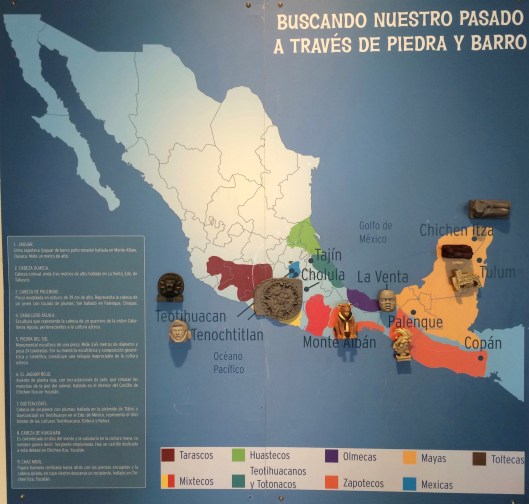
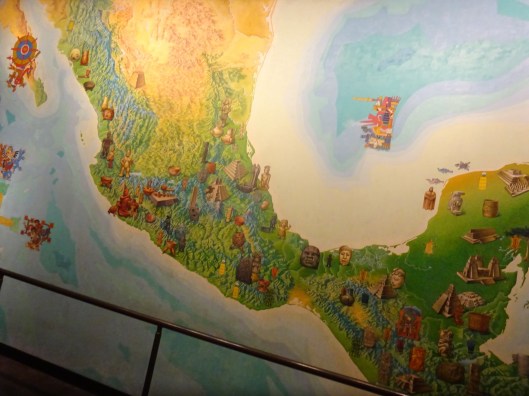
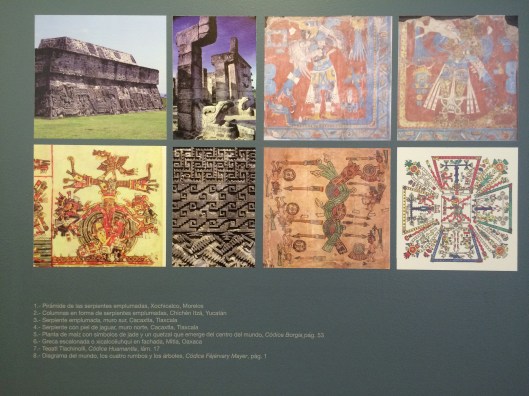
Anahuac was the name given by the Aztecs to the “land surrounded by water” (the Gulf of Mexico on one side and the Pacific Ocean on the other), which culturists and historians refer to as Mesoamerica. When the Spanish Conquerors and Priests arrived to “Anahuac” they start to call the region “New Spain” until the time of independence when we started calling our nation: Mexico. Although the name “Anahuac” comes from Nahuatl (the language spoken by the Aztecs), Mesoamerica was composed by the following cultures; Aztec, Huastec, Maya, Mixtec, Olmec, Purepecha, Tarascan, Toltecs, Totonac and Zapotec making the region a truly multicultural part of the Americas!

DSC08075ESPAÑOL

Hoy en día conocemos a nuestro país con el nombre de México. Durante la época colonial se le conocía a nuestro territorio como la Nueva España y antes de la llegada de los conquistadores y misioneros españoles, los indígenas Aztecas utilizaban la palabra Anáhuac para denominar al territorio “rodeado de agua” (por un lado el Golfo de México y por el otro el Océano Pacífico). Históricamente hoy nos referimos a esta zona cultural con el nombre de “Mesoamérica”. Aunque la palabra “Anáhuac” es de origen Náhuatl, en “Mesoamérica” han vivido personas pertenecientes a distintas culturas tales como la Huasteca, Maya, Mexica, Mixteca, Olmeca, Purépecha, Tarasca, Tolteca, Totonaca y Zapoteca. Durante muchos décadas y quizá siglos ha existido el intercambio cultural en Mesoamérica.

IMG_6263.jpg


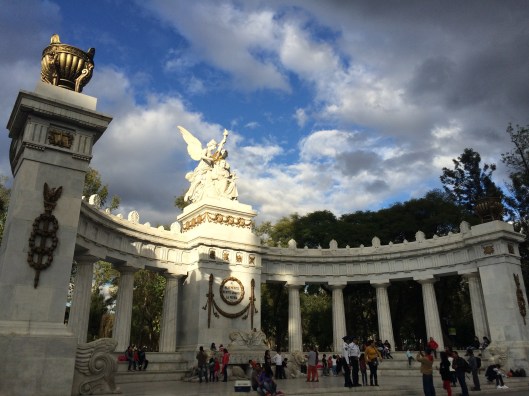
Benito Juárez (1806-1872)

Benito JuárezENGLISH

When I was a child, I remember that my elementary school teacher said that historians were not sure about Benito Juarez’ birthdate but since he was born when the flowers were “blooming”, March 21st was chosen as his birthdate.

Juarez’ ancestors were Zapotec Indians from the southern state of Oaxaca. He is the first indigenous person to become president of Mexico (around the same time when Abraham Lincoln was president of the United States of America). It is said that former Italian Prime Minister Mussolini was named “Benito” by his parents honoring Benito Juarez.

Mexico City’s International Airport is also named after Benito Juarez.

Today, most Mexicans hold “Respect” as part of our set of values and perhaps this is due to Juarez’ most famous (and wise) phrase: “Amongst people & nations, respect for the rights of others brings peace”.

IMG_9512ESPAÑOL

Cuando era niño me enseñaron en la escuela que no se conocía la fecha exacta del nacimiento de Benito Juárez (el Benemérito de las Américas) pero que se había seleccionado el 21 de marzo como fecha de su natalicio pues se decía que Juárez había nacido cuando las flores empezaban a salir (por eso se asumió que nació durante la primavera).

Los ancestros de Juárez fueron principalmente Zapotecas y ha sido el primer indígena en llegar a la presidencia de México. Fue contemporáneo de Abraham Lincoln y al parecer los padres del famoso Primer Ministro italiano Benito Mussolini lo nombraron así en honor a Juárez.

Hoy en día el Aeropuerto Internacional de la Ciudad de México lleva su nombre.

La mayor parte de los mexicanos tenemos en nuestro código de valores “El Respeto” como valor primordial que probablemente viene del legado que Juárez nos dejó con su célebre y sabia frase: “El Respeto al Derecho Ajeno es la Paz.”

St. Patrick’s Day

Version 2ENGLISH

Most of the Irish immigrants who came to Mexico were Catholic. They left Ireland when it was under British control and settled in Texas when it was still part of Mexico.

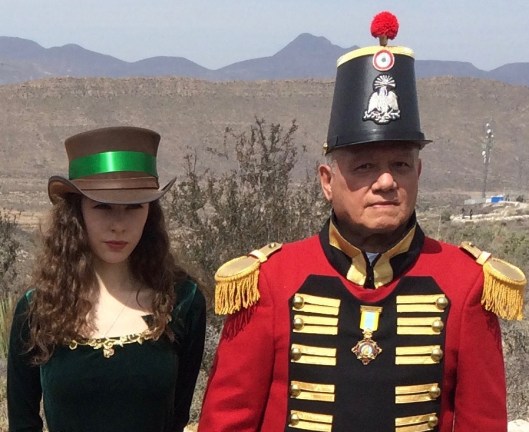
During the Mexico-US war in 1846-1848 Irish soldiers helped Mexico through St. Patrick’s Battalion.

Some famous Mexicans who have Irish ancestry are: former president Álvaro Obregón (his original surname was O’Brien), novelist Justo Sierra, Hollywood legend Anthony Quinn, painter & muralist Juan O’Gorman and senator Santiago Creel.

Happy St. Patrick’s Day to Ireland!

PHOTOS: Site where “La Angostura Battle” took place near Saltillo, Coahuila.

Version 3ESPAÑOL

La mayoría de los inmigrantes Irlandeses que vinieron a México eran católicos y llegaron al país cuando Irlanda estaba bajo el dominio Británico. Muchos de ellos se asentaron en Texas cuando aun era parte de México.

Durante la guerra de México y EEUU que tuvo lugar entre 1846-1848 el Batallón de San Patricio (formado por soldados Irlandeses) apoyó a los mexicanos.

Algunos mexicanos famosos de origen irlandés son: el ex presidente Álvaro Obregón (su apellido original era O’Brien), el novelista Justo Sierra, el actor de cine Anthony Quinn, el muralista Juan O’Gorman y el político Santiago Creel.

¡Felicidades a Irlanda en su día festivo en honor a San Patricio!

FOTOS: Sitio de “La Batalla de la Angostura” muy cerca de Saltillo, Coahuila.


Pancho Villa

IMG_0066.jpgENGLISH

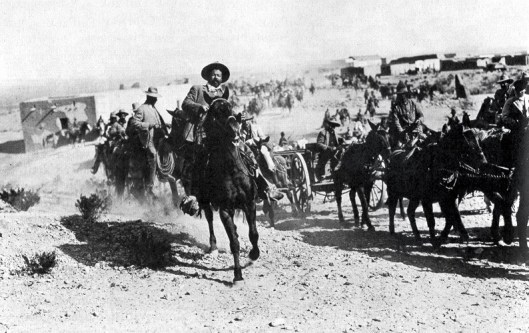
On March 9th, 1916 Pancho Villa (sitting on the left side of the photo) attacked Columbus, New Mexico. For this reason the US Army was trying to find him back in Mexico many months later. Some people think that the word “Gringo” began to be used at that time when the peasants tried to protect Villa by telling the US soldiers (who wore a green uniform) “Green Go” hoping they would return to their country. Nowadays, the word “Gringo” is a friendly term used to refer to the people who come from the USA.

IMG_0064

ESPAÑOL

El 9 de marzo de 1916 Pancho Villa “invadió” Columbus, Nuevo México. Por esta razón fue buscado por el ejercito de los EEUU meses después. Se piensa que de ahi nació la palabra “Gringo” pues la gente que protegía a Villa le decía a los soldados norteamericanos vestidos de verde “Green Go” para que se regresaran a su país. Hoy en día, la palabra gringo no tiene la connotación negativa de hace 100 años.


Happy International Women’s Day!

malinche

ENGLISH

Before the Spaniards arrived to Mexico in 1519 following Conqueror Hernán Cortez …our present territory was populated by many tribes and the most well known were the Maya and the Aztecs also called “Mexicas”(not Mexicans). Actually Mexico wasn’t called “Mexico” at that time, the dominant tribes of the highlands of Mexico, called this land “Anáhuac” which means “Land between the Waters” considering that the Aztec Empire was located in the land between the Gulf of Mexico and the Pacific Ocean.

A very important “intercultural” person at that time was a woman named “Malinche” who belonged to an Aztec (Nahua) tribe but was sold to the Mayas in the current southeastern state of Tabasco when she was in her late teens. She was fluent in many tribal languages becoming an interpreter between Cortez, the Aztecs, the Mayas and other tribes.

History is now being kinder with Malinche. Before she used to be regarded as a “traitor” since she became Cortez’ lover. Even today, Mexican people call those Mexicans who prefer foreign people or foreign cultures “Malinchistas”.

Whether she was a “traitor” or an “intercultural bridge”, Malinche is definitely the mother of Mexico’s “Mestizaje” (race mixing) by giving birth to her son Martín Cortez the first person in Anáhuac to have Spanish and Aztec blood. She is probably also the First International Woman or “Diplomat” this part of the world had!

Happy International Women’s Day!

Malinche_CortesESPAÑOL

Una persona “interculturalmente” importante al momento de la llegada de los españoles a Mesoamérica en 1519 fue una mujer llamada “Malinche”. Pertenecía a la etnia Nahua pero fue vendida a etnias Mayas del actual estado de Tabasco (en el sureste mexicano). Los Mayas y los Aztecas (también conocidos como “Mexicas”) son dos de las etnias que han dejado mayor impacto en Mesoamérica.

Al llegar el conquistador Hernán Cortez a las costas del sureste mexicano, la Malinche fue nuevamente entregada (junto con otras doncellas) a Cortez convirtiéndose en su concubina y su interprete ayudándolo a penetrar al Imperio Azteca. Por esta “preferencia” que ella tuvo al ayudar a los “extranjeros”, actualmente los mexicanos llamamos “malinchistas” a aquellas personas que prefieren a culturas y/o personas extranjeras.

Hoy en día la historia parece ser mas suave y justa con La Malinche pues ahora se le empieza a ver como una mujer que fue un “puente intercultural” entre varias culturas. ¿Traidora o Heroína? Lo importante es recordar que además de haber sido la intérprete de Hernán Cortez ella también fue y sigue siendo la madre del mestizaje que hoy es conforma nuestras raíces. Probablemente también se le puede considerar la primer mujer “internacional” o diplomática de esta tierra a la que hoy llamamos México.

¡Feliz Día Internacional de la Mujer!


www.proudtobemexican.com

ENGLISH

This morning the local radio news shared that Jorge Castañeda (a former Foreign Affairs Minister from Mexico) started a website called www.proudtobemexican.com . Perhaps many Mexicans will share this website with their family & friends (not seeking to feel better than other nationalities but rather to share the contributions of Mexican people around the world). Beyond sharing humorous memes, Mexican people across the Planet can share their day-to-day contributions that have a local impact and also those contributions that have a global impact. Whether cleaning homes or directing movies Team Work is very important. What effect do you think this website could have by sharing these contributions around the globe?

Version 2ESPAÑOL

Hoy se transmitió en las noticias que el ex-secretario de Relaciones Exteriores de México, Jorge Castañeda inició un portal llamado www.proudtobemexican.com . Se busca que los mexicanos puedan compartir este portal entre amigos y familiares (no con el fin de que los mexicanos no sintamos superiores con respecto a otras nacionalidades, mas bien con el fin de compartir las contribuciones que nuestros paisanos han hecho en el mundo). Además del humor reflejado en algunos memes, se pueden compartir a través de este portal, contribuciones sencillas y cotidianas con impacto local así como las contribuciones de ciudadanos mexicanos con un impacto global. No importa si se trabaja limpiando casas o dirigiendo películas, el Trabajo en Equipo es de suma importancia. ¿Qué efecto tendría dar a conocer estas contribuciones globales públicamente?

1253430151_den-bez-meksikanca

Mexican Movie Directors win the Oscar three years in a row! A reflection of an experienced CQ?

ENGLISH

In 2014 Alfonso Cuarón won the Oscar for Best Director with his movie GRAVITY. In 2015 Alejandro González Iñárritu won best director and best movie with his film BIRDMAN. Again, in 2016 Alejandro González Iñárritu wins the Oscar for his directing skills with his movie THE REVENANT. Emmanuel Lubezki, a Jewish Mexican cinematographer has also won three years in arrow for his photographic & cinematographic skills with the same 3 movies. These three “global” Mexicans have effectively worked abroad with actors and film staff belonging to many nationalities. I wonder if González Iñárritu, Cuarón and Lubezki are aware of their CQ (Cultural Quotient which is a measure that reflects a person’s capability to relate and work effectively across cultures). Due to their international achievements (such as the above movies as well as BABEL, BIUTIFUL, A LITTLE PRINCESS, HARRY POTTER & THE PRISONER OF AZKABAN, etc.), I have a feeling their CQ will be high! Congratulations to these 3 Oscar winners (and also to director Guillermo del Toro) for “generating” success beyond Mexico’s borders!

IMG_9401ESPAÑOL

En el año 2014 Alfonso Cuarón ganó el Oscar como Mejor Director con su película GRAVEDAD (Gravity). En el 2015 Alejandro González Iñárritu ganó con la película BIRDMAN (Mejor Director y Mejor Película). Este año González Iñárritu vuelve a ganar el Oscar como Mejor Director con su película EL RENACIDO (The Revenant). El cinematógrafo capitalino Emmanuel Lubezki también ha ganado 3 oscares consecutivos por las mismas películas. ¿Me pregunto si estos 3 mexicanos “globales” así como Guillermo del Toro, conocen su CQ (Coeficiente Cultural) el cual mide la capacidad de las personas para relacionarse y trabajar efectivamente con personas pertenecientes a otras culturas? Con base a los éxitos internacionales de sus películas (BABEL, BIUTIFUL, GRAVEDAD, HARRY POTTER Y EL PRISIONERO DE AZKABAN, EL LABERINTO DEL FAUNO) tengo “la corazonada” de que estos 4 mexicanos globalizados cuentan con un CQ alto. ¡Felicidades a nuestros 4 cineastas por llevar el nombre de México en alto mas allá de nuestras fronteras!

A Multy-party System

IMG_8884ENGLISH

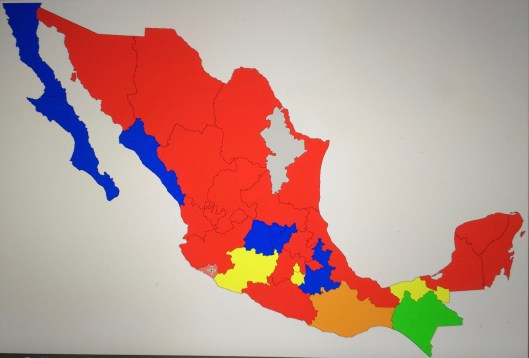
Last year on February 26th (less than 24 hours after I arrived to Mexico after spending almost 20 years living in Asia) I was invited by my neighbors to witness Fernando Elizondo’s campaign launch who was running for state governor representing a political party that I was not familiar with: Citizens Movement (Movimiento Ciudadano). When I graduated from college back in 1988 one party ruled all of Mexico’s 32 states. Today, there are 5 parties ruling across the Mexican states and one independent candidate who became the first “independent” governor in Mexican History (in my home state of Nuevo León). His nickname is “El Bronco” and he is being supported by Fernando Elizondo who merged his political expertise to support El Bronco’s 6-year government term.

Red=PRI; Blue=PAN; Yellow=PRD; Orange=Citizen’s Movement; Green=Green Party; Gray=Independent Candidate

IMG_8880ESPAÑOL

Justo a menos de 24 horas después de haber regresado a México (después de haber vivido casi 20 años en Asia), el 26 de febrero del año pasado, mis vecinos me invitaron a presenciar el inicio de la campaña política de Fernando Elizondo candidato a gobernador con el partido Movimiento Ciudadano. Cuando me gradué de la carrera en 1988 los 32 estados de la república eran gobernados por un solo partido. Veintiocho años después me encuentro viviendo en un país cuyos estados son gobernados por 5 partidos políticos y un candidato independiente (el primero en la historia de México). Fernando Elizondo se integró al equipo del gobernador independiente conocido como “El Bronco” quien fue electo para gobernar el estado de Nuevo León.

Rojo=PRI; Azul=PAN; Amarillo=PRD; Anaranjado=Movimiento Ciudadano; Verde=Partido Verde; Gris=Independiente

Welcome back to México!

ENGLISH

Exactly 1 year ago, on February 25, 2015 I returned to Mexico after living in Asia for almost 20 years. It has been a nice experience to be back home. Although many people think we have challenges in our country, I have found many positive changes in Mexico! I will be writing about these changes in my blog and I will also introduce bits and pieces of Mexican Culture. One of these positive changes is the boarding process when flying with Aeroméxico in different airports of Mexico. In a few countries where I used to travel frequently the boarding process was chaotic! Since I returned to Mexico I no longer have to worry about people cutting in line or even being rudely pushed by others who wanted to get in ahead of you. The boarding system by Aeroméxico is well organized by arranging several boarding lines with their “boarding zone” number.

IMG_8639A (1).jpgESPAÑOL

Justo hoy hace exactamente 1 año regresé a México después de haber vivido casi 20 años en Asia. Ha sido una experiencia muy agradable e interesante estar de nuevo en mi país pues aunque escucho a mis paisanos decir que hay retos y oportunidades para mejorar siempre, también he visto muchos avances y cambios positivos en todos los lugares que he visitado en México durante el 2015. Uno de estos cambios es la manera ordenada de abordar que he visto en los vuelos que he tomado con Aeroméxico en diferentes aeropuertos del país. En algunos países por los que viajaba frecuentemente, el proceso de abordaje era a veces caótico. Afortunadamente desde que regresé a México ya no tengo que preocuparme por empujones ni gente que se meta en la fila para abordar antes que tú, pues en las salas de espera se organizan varias filas para abordar dependiendo de la zona en que le tocó a cada pasajero.

Version 2

Flag’s Day: February 24th

Flag_of_Mexico.svg-2ENGLISH

The South Korean flag is known as Taegukgi which means “Flag of the Absolute” (referring to the Yin and Yang forces, blue and red respectively) which derived from Daoism and perhaps Korean Shamanism. The black lines are called Trigrams and they represent the natural forces. The trigram with 3 lines represents Heaven, the one with 4 lines represents Fire, the one with 5 lines represent Water and the one with 6 lines represent Earth. All in all, the Taeguk & Trigrams represent Balance and Harmony.

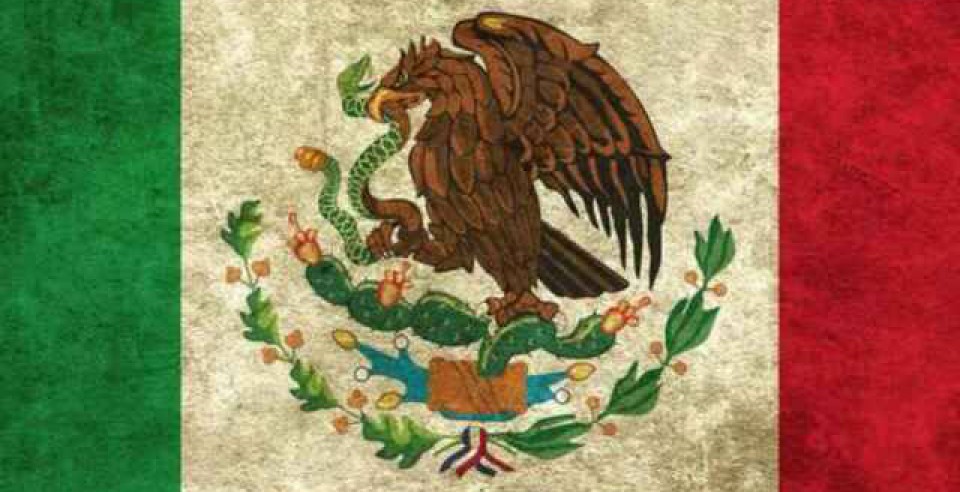
The Mexican flag has a similar connection to Balance and Harmony but first lets talk about the colors. The Green means “Hope”; the White means “Purity”; the Red means “The Blood of the Heroes” who have given their lives for Mexico. The Eagle & the Snake are a symbol that that Gods asked the Aztec People to find in nature. Once they found this symbol the Aztecs (also known as Mexica People) must start constructing their city there. And so they did, they found the Eagle & the Snake fighting on an Island in Lake Texcoco in 1325 so they build their capital there and called it Tenochtitlan (which means the “Land of Cactus”). When the Spanish conquerors arrived in 1521 they destroyed Tenochtitlan and over its ruins created Mexico City.

For many indigenous people in Mexico, the battle between the Eagle and the Snake represents a balance between Heaven and Earth. Eagles fly in Heaven so they represent Heaven and snakes dwell in the Earth so they represent Earth.

In Mexico, February 24th is “Flag’s Day”. Happy Celebrations!

Flag_of_South_Korea.svgESPAÑOL

A la bandera de Corea del Sur se le conoce como Taegukgi que significa “La Bandera de lo Absoluto”, símbolo que derivó del Taoísmo y posiblemente del chamanismo coreano (refiriéndose a las fuerzas del Yin y el Yang, los colores azul y rojo respectivamente).

A las líneas negras se les conoce como trigramas y representan las fuerzas de la naturaleza. El trigrama con 3 líneas representa el Cielo, el de 4 líneas representa el Fuego, el de 5 líneas representa el Agua y el de 6 líneas representa a la Tierra. En conjunto, el Taeguk  y los trigramas representan el balance y la armonía.

La bandera mexicana tiene una conexión similar con el balance y la armonía pero antes de entrar al tema hablaremos de sus colores. El verde significa la Esperanza, el blanco la Pureza y el rojo la Sangre derramada de los héroes nacionales que sacrificaron sus vidas por México.

El águila y la serpiente simbolizan la “Señal” que los dioses le dieron al pueblo Azteca para localizar el lugar donde deberían de fundar su capital. Y así fue, justo en el Lago de Texcoco los mexicas encontraron la señal en 1325 y ahí construyeron Tenochtitlán (que significa Tierra de Nopales). Poco después de la llegada de los conquistadores españoles en 1521 al Valle de México destruyeron Tenochtitlán y sobre sus ruinas construyeron la actual Ciudad de México.

Según algunos pueblos indígenas, la batalla entre el águila y la serpiente representa el balance entre el Cielo y la Tierra pues las águilas vuelan en el cielo mientras que las serpientes se arrastran sobre la tierra.

¡Celebremos hoy a nuestra bandera!