On March 25, 1517 a battle took place at the Bay of “The Bad Battle” now called Champoton and a few kilometers south of the current city of Campeche. This was the first battle won by the Maya people defeating the Spanish invaders, where more than 50 Spaniards lost their lives and many others were wounded.
ESPAÑOL
El 25 de marzo de 1517 ocurrió la batalla de Champotón, en una bahía al sur de la actual ciudad de Campeche conocida como la bahía de la “Mala Pelea” ya que los españoles tuvieron una rotunda derrota que dejo un saldo mayor a los 50 muertos además de muchos heridos. Fue la primera pelea en la que los maya vencían a los invasores europeos.
Teotihuacán in the central state of “Estado de México”.
ENGLISH
Mexicans love to welcome the spring equinox at ancient sacred places such as Teotihuacan, Chichen Itza & Tajin. The word equinox comes from the Latin words aequus(equal) and nos (night) giving the term equal night (since day and night have the same length during that day). In the northern hemisphere this happens when the Sun crosses the line of the equator with a northerly direction and it only happens twice a year: around March 19-20 and September 21-24. In Chichen Itza there is an interesting phenomenon of a “heavenly dragon” (Quetzalcoatl) descending from the main pyramid.
Chichen Itzá in the southeastern state of Yucatán.
ESPAÑOL
Los mexicanos acostumbramos visitar algunos sitios considerados sagrados tales como Teotihuacán, Chichen Itzá o el Tajín, para recibir el equinoccio de la primavera. La palabra equinoccio proviene de la palabra latina aequus (igual) y la palabra nos(noche) dando origen al concepto de noche igual pues durante ese día la noche y el día tienen la misma duración. En el hemisferio norte ocurre cuando el sol cruza el ecuador, con dirección rumbo al norte con respecto al cielo, sucediendo esto sólo dos veces al año: en marzo entre el 19 y 20 y en septiembre, entre el 21 y 24. En Chichen itzá ocurre un interesante fenómeno done se ilumina la figura del Dios Quetzalcóatl simulando su descenso del cielo a la tierra.
Happy International Women’s Day! Three GREAT women in Mexican History (there are many, many more)!
1. Malintzin (Malinche): Intercultural interpreter between two great civilizations (Europe and Mesoamerica) during the early 1500’s. Mother of the first child of mixed genes (from Spain and Mexico).
2. Sor Juana Inés de la Cruz: a colonial days writer who connected the Spanish speaking world, through her poetry, in the 1600’s.
3. Leona Vicario: Mother of The 1810 Mexican Independence movement.
4. Carmen Serdán believed in democracy and fought for the ideals of the 1910 Mexican Revolution (Mexican Civil War).
ESPAÑOL ¡Feliz día internacional de la mujer! Tres grandes mujeres en la historia de México:
Malintzin (la Malinche): madre del mestizaje “mexicano” e interprete entre las culturas de dos grandes civilizaciones (la europea y la mesoamericana) al inicio de los 1500’s.
Sor Juana Inés de la Cruz: poeta de la época colonial que a través de su literatura conectó al mundo de habla hispana.
Leona Vicario: madre de la patria que luchó durante la guerra de independencia de 1810.
Carmen Serdán promovió la democracia así los ideales de la Revolución Mexicana de 1910.
In Mexico, February 24th is “Flag’s Day” since 1. Happy Celebrations!
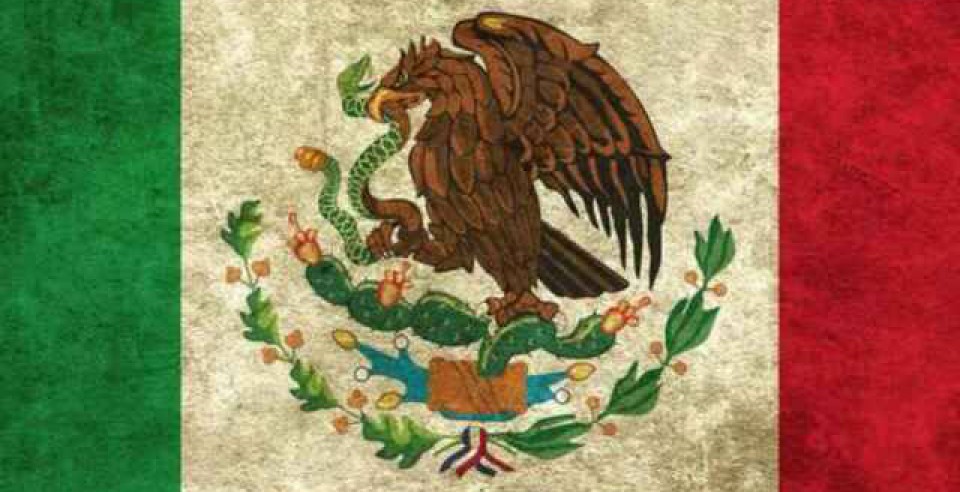
The Mexican flag is considered on of the most beautiful flags in the world! Let’s describe it starting to talk about its colors. The green color means “hope”; the white means “purity”; the red means “the blood of the heroes” who have given their lives for Mexico. The eagle & the snake represent the Sun and the Earth, respectively.
The eagle & the snake are also a sign that the gods asked the Aztec People to find in nature. Once they found this symbol the Aztecs (also known as Mexica People) must start constructing their capital city there.
And so they did, they found the eagle & the snake fighting on an Island in Lake Texcoco in 1325 so they build their capital there and called it Tenochtitlan (which means the “Land of Cactus”).
Mexico has had several flags during its 200 years as an independent nation. The most current flag was designed in 1968.
ESPAÑOL
Desde 1934, los mexicanos celebramos el día de la bandera cada 24 de febrero.
La bandera mexicana es considerada una de las más bellas del mundo. Tiene un simbolismo muy bonito que empezaremos a describir con sus colores. El verde significa la esperanza, el blanco la pureza y el rojo la sangre derramada de los héroes nacionales que sacrificaron sus vidas por México.
El águila y la serpiente simbolizan el sol y la tierra respectivamente.
El águila y la serpiente también fueron la “señal” que los dioses le dieron al pueblo Azteca para localizar el lugar donde deberían de fundar su capital. Y así fue, justo en el Lago de Texcoco los mexicas encontraron la señal en 1325 y ahí construyeron Tenochtitlán (que significa “tierra de nopales”).
Desde su independencia de España, México ha tenido varias banderas siendo la más reciente la que fue diseñada en 1968.
Former president Vicente Guerrero was born in Tixtla, Mexico to a mestizo father and an Afro-Mexican mother in 1782. He became president in 1829 and during this year he abolished slavery in Mexico. Today, people in Mexico are becoming aware of our country’s third root: The African Heritage. Most of the Afro-Mexicans today live in the southern states of Veracruz, Guerrero and Oaxaca and also in the northern state of Coahuila.
ESPAÑOL
Vicente Guerrero nació en 1782 en el poblado de Tixtla localizado en al actual estado de Guerrero. Llegó a la presidencia de México en 1829 mismo año en que decretó la abolición de la esclavitud en el país. Su madre era de origen africano. Actualmente la tercera raíz de México esta siendo reconocida por más y más mexicanos. Los estados sureños de Veracruz, Guerrero y Oaxaca así como Coahuila en el norte de México, son los que concentran las poblaciones de afrodescendientes más representativas de la república.
In Mexico we celebrate today “Friendship & Love Day”. These photos were taken in southeastern Mexico at the Maya ruins of Palenque in the state of Chiapas.
ESPAÑOL
¡Felíz día del amor y la amistad! Estas fotos fueron tomadas en Palenque, Chiapas en el sureste mexicano.ENGLISHIn Mexico we celebrate today “Friendship & Love Day”. These photos were taken in southeastern Mexico at the Maya ruins of Palenque in the state of Chiapas.
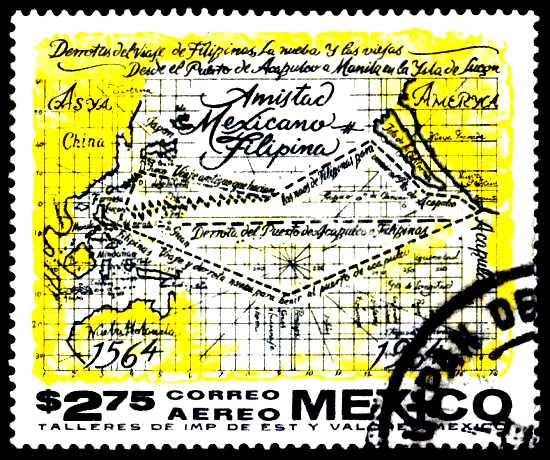
Felipe de Jesús was a Novohispanic Catholic missionary who was born in Mexico City in 1572. He travelled from Acapulco, in present day Mexico to Manila, Philippines on the Manila Galleon in 1589 taking a mercantile career. He became connected with the Franciscans in Manila and in 1596 he was shipwrecked in Japan when he was on his way back to Acapulco The Japanese thought they the friars were on a colonization mission so they were sentenced to death. He was one of the 26 martyrs in Nagasaki. Saint Phillip of Jesus is the first Mexican canonized saint.
ESPAÑOL
Felipe de Jesús fue un misionero católico nacido en la ciudad de México en 1572. Viajó como comerciante hasta Manila, Filipinas zarpando desde Acapulco, hoy México. En las Filipinas se acercó a los franciscanos de Manila y al regresar a Acapulco, una tormenta desvió su barco hacia las costas de Japón donde fue capturado por los japoneses quienes pensaron que los frailes eran parte en una misión colonizadora. Veintiséis frailes fueron martirizados en Nagasaki. San Felipe de Jesús es el primer santo canonizado de México.
On February 5th, 1917 Mexican president Venustiano Carranza promulgated the Mexican Constitution, the first of its kind to include social rights. It served as a model to the 1918 Russian Constitution and the 1919 Weimar Constitution.
ESPAÑOL
El 5 de febrero de 1917 el presidente mexicano Venustiano Carranza promulgó la constitución mexicana siendo la primera en el mundo en incluir derechos sociales sirviendo de modelo para la gestación de las constituciones de Rusia (1918) y Weimar (1919).
During Candlemas Day, Catholics celebrate the purification of Virgin Mary and the presentation of Jesus Christ at the Temple. In Mexico, most of the religious celebrations combine European and Mesoamerican traditions. The Aztecs used to offer tamales to their main Gods (Tláloc, Chalchiuhtlicue & Quetzalcóatl) at the beginning of their agricultural year. Tamales are made of corn, the main material used by the Gods to create human beings. The word tamale comes from the Nahuatl language where the word tamalli means “wrapped”. In Mexico there are over 500 types of tamales.
ESPAÑOL
La fiesta de la Candelaria es una mezcla de tradiciones prehispánicas y católicas. En el rito católico se celebra purificación de la virgen y la presentación de Jesús (después de 40 días) en el templo de Jerusalén. Dentro del mito prehispánico, se ofrendaban tamales a los dioses Tláloc, Chalchiuhtlicue y Quetzalcóatl, principalmente por estar hecho de maíz (el material que los dioses utilizaron para crear al hombre). La palabra tamal viene del vocablo náhuatl tamalli que significa “envuelto”. En México hay más de 500 tipos de tamales.
Although piñatas are more popular during Christmas and birthdays, perhaps it is a good idea to introduce them at the very beginning of the year to start 2021 with good vibes. A traditional piñata is shaped as a 7-point star each representing a capital sin: envy, gluttony, greed, lust, pride, sloth and wrath. Mexicans usually hit the piñatas in order to break them and get rid of these 7 capital sins. When the piñata breaks, good things come out of them (chocolates, peanuts and fruits). All in all, breaking the piñatas symbolize the victory of good things over bad ones.
ESPAÑOL
Aunque las piñatas son más utilizadas durante la navidad o los cumpleaños, sería bueno iniciar el año 2021 rompiendo una para atraer las buenas vibras y alejar las malas. De hecho, una piñata tradicional tiene la forma de una estrella con siete picos que simbolizan los pecados capital:, avaricia, envidia, gula, ira, lujuria, pereza y soberbia. Al romper una piñata, los mexicanos buscamos vencer el mal con el bien y es por ello que en el interior de la piñata colocamos cacahuates, chocolates y frutas.