Multicultural Mexico

~ Getting to know Mexico Better!

Multicultural Mexico

Category Archives: Culture

Multicultural Mexico: Modern Era

21 Tuesday Jun 2016

Posted by Victor H. Garza 高山 in Culture

≈ Leave a comment

soy-puro-mexicano

ENGLISH

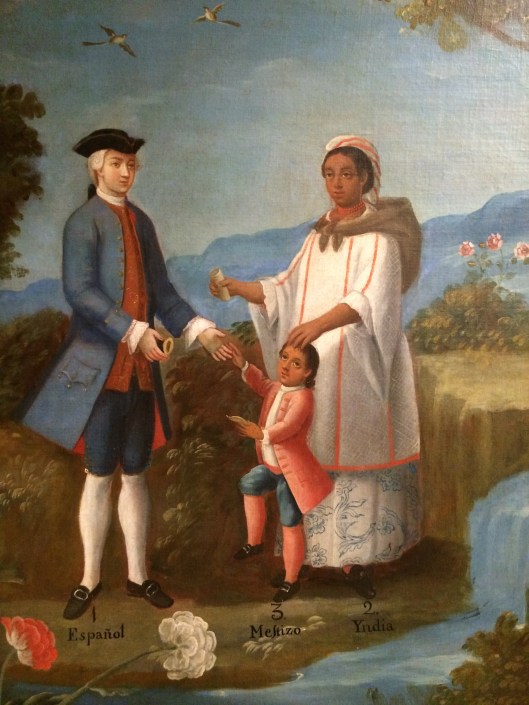
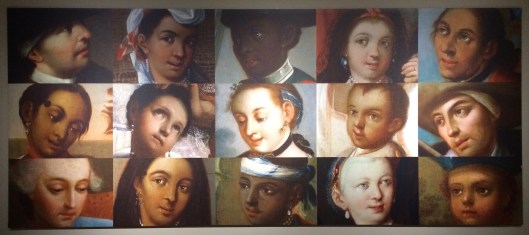
In 1942 Emilio “El Indio” Fernandez directed a movie called “Soy Puro Mexico” (I am a Pure Mexican). But what does being a “Pure Mexican” mean? Jose Vasconcelos, Mexico’s Minister of Education from 1921-24 wrote a book called “La Raza Cosmica” (The Cosmic Race) where he described a Mestizo (mixed-race) Mexican as a child coming from a “Spaniard and Indigenous” couple. Many Mexicans, including myself, grew up with this concept. However, Spain and Mexico have always had a diverse population! Spain had the presences of Arabs during approximately 800 years and Mexico has indigenous people that range from the tall Raramuri Indians in northwest Mexico to the “Asian” looking Maya Indians in southeastern Mexico. Mexico also has a “Third Root”, the African population that arrived during the 16th Century. So there is no doubt that Mexico’s population is Multiethnic going beyond the traditional concept of “Spanish and Indigenous”. As a matter of fact, last year I did a DNA test to discover my ancestry and the results were enlightening! My genes come from: Asia 2%, Africa 5%, the Americas 28% and Europe 65% (besides Spain, my genes also came from far away places like Finland & Russia!). There is no doubt that under our “tanned skin”, Mexicans carry genes that go beyond Spanish & Indigenous bloods! During the last 400 years Mexico has truly been a “Melting Pot”!

Multicultural Mexico.jpgESPAÑOL

La famosa película “Soy Puro Mexicano” dirigida en 1942 por Emilio “El Indio” Fernández lleva en su título la palabra “puro”. ¿Pero a que se refiere ser “puro mexicano”. José Vasconcelos, Secretario de la Educación Pública de 1921-1924 introdujo en su libro “La Raza Cósmica” que el mestizo mexicano provenía de la mezcla del indio y el español. Al igual que yo, muchos mexicanos crecimos con este concepto pero creo que “ser mexicano” va mucho mas allá de ser descendientes de los indígenas y españoles pues desde el siglo XVI la raza africana también ha estado presente en nuestro país. Además, los españoles históricamente vienen de una mezcla entre visigodos, bereberes, árabes, etc., y los indígenas de México también reflejan una inmensa variedad que va desde los Rarámuri del noroeste del país hasta los Maya en el sureste de México. ¡Así que no cabe duda que el mestizaje de México es diverso y rico! De hecho, el año pasado me hice una prueba genética del ADN para conocer las raíces de “mi mestizaje” y ¡vaya que el resultado fue sorprendente! Tengo genes de Asia 2%, de África 5%, de América 28% y de Europa 65% (además de España también aparecieron genes de lugares tan lejanos como Finlandia y Rusia). No cabe duda que bajo nuestra “piel morena”…los mexicanos llevamos genes que van mas allá de la sangre española y la sangre indígena. Los mexicanos somos un arcoíris étnico. ¡Viva México!

mexico-multicultural


Multicultural Mexico: Colonial New Spain

16 Monday May 2016

Posted by Victor H. Garza 高山 in Culture

≈ Leave a comment

Version 2ENGLISH

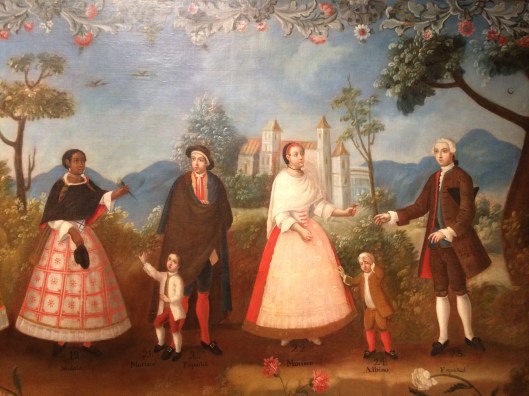
From 1521 to 1808 New Spain truly was a “Melting Pot” (which is a metaphor of a heterogeneous society becoming a homogenous one). During the 20th Century we Mexicans were taught in school that society in New Spain was made up of Spaniards (born in Spain), Criollos (Spanish people born in the Americas), Indians (Native Indigenous Mexicans) and Mestizos (a mixture of a Spaniard and an Indian). Today, in the 21st Century, Mexican people are starting to be aware and recognize the important African roots found within our people and culture, specially in the southern states of Guerrero, Oaxaca and Veracruz. There was also a significant racial and cultural influence coming from Asia (through the Manila Galleon that linked the Mexican port of Acapulco with the Philippines). It is also important to remember that people who came from Spain were quite diverse as well (Catalans, Basques, Visigoths, Celts, Moors, etc.) and our Indians belonged to an even higher amount of ethnic groups! This process known in Mexico as “Mestizaje” (Miscegenation) truly reflects a “Melting Pot” where different races have been mixing during the last 300 years becoming the “tanned” society that Mexico is today. I am sure that if any Mexican does a DNA test, genes from the Americas, Africa, Asia and/or Europe will show up (just as my DNA test reflected this)!

IMG_1241.jpgESPAÑOL

Desde 1521 a 1808 la Nueva España realmente fue un “Crisol de Razas”. Durante el Siglo XX a los mexicanos se nos enseñó en la escuela que la sociedad novohispana estaba compuesta por españoles peninsulares, criollos (españoles nacidos en América), indígenas y mestizos (la mezcla entre españoles e indígenas). Hoy en día, en pleno Siglo XXI los mexicanos estamos conscientes de que hubo y sigue habiendo una importante influencia africana, que además de manifestarse racialmente en algunos estados de la república como Guerrero, Oaxaca y Veracruz, también está presente en la cultura, especialmente en la música y la danza. También hubo una presencia asiática, racial y culturalmente hablando, que llegó a través de “La Nao de China” (la pelea de gallos es un ejemplo cultural de ello). Hay que recordar que los españoles en sí son una mezcla racial tremenda que se dio entre celtas, moros, visigodos, catalanes, vascos, etc. y como vimos en el artículo pasado los indígenas también son parte de una grandísima diversidad de etnias diferentes. Este gran proceso de “mestizaje” que se ha dado durante casi 300 años realmente ha formado un “Crisol de Razas” que conforman la población mexicana moderna y que seguramente se vería reflejado en nuestros genes al someternos a un examen de ADN. En mi caso así lo fue donde aparecieron genes de América, África, Asia y Europa.

IMG_1236.jpg


Multicultural Mexico: Indigenous Mesoamerica

01 Friday Apr 2016

Posted by Victor H. Garza 高山 in Culture

≈ 1 Comment

IMG_1278.jpgENGLISH

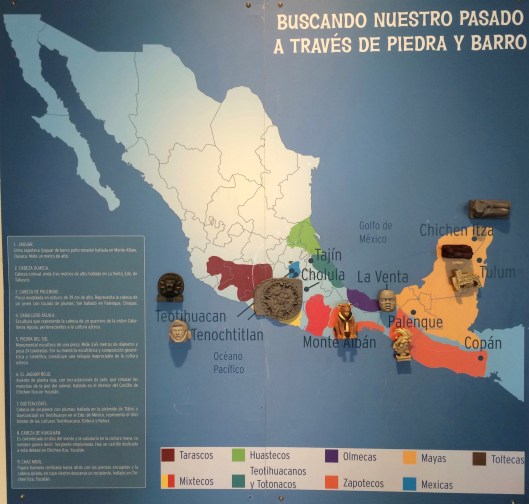
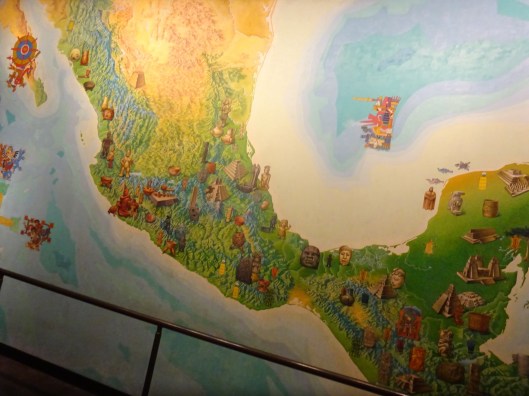
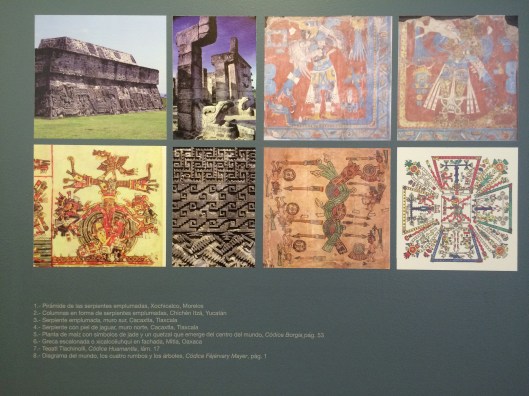
Anahuac was the name given by the Aztecs to the “land surrounded by water” (the Gulf of Mexico on one side and the Pacific Ocean on the other), which culturists and historians refer to as Mesoamerica. When the Spanish Conquerors and Priests arrived to “Anahuac” they start to call the region “New Spain” until the time of independence when we started calling our nation: Mexico. Although the name “Anahuac” comes from Nahuatl (the language spoken by the Aztecs), Mesoamerica was composed by the following cultures; Aztec, Huastec, Maya, Mixtec, Olmec, Purepecha, Tarascan, Toltecs, Totonac and Zapotec making the region a truly multicultural part of the Americas!

DSC08075ESPAÑOL

Hoy en día conocemos a nuestro país con el nombre de México. Durante la época colonial se le conocía a nuestro territorio como la Nueva España y antes de la llegada de los conquistadores y misioneros españoles, los indígenas Aztecas utilizaban la palabra Anáhuac para denominar al territorio “rodeado de agua” (por un lado el Golfo de México y por el otro el Océano Pacífico). Históricamente hoy nos referimos a esta zona cultural con el nombre de “Mesoamérica”. Aunque la palabra “Anáhuac” es de origen Náhuatl, en “Mesoamérica” han vivido personas pertenecientes a distintas culturas tales como la Huasteca, Maya, Mexica, Mixteca, Olmeca, Purépecha, Tarasca, Tolteca, Totonaca y Zapoteca. Durante muchos décadas y quizá siglos ha existido el intercambio cultural en Mesoamérica.

IMG_6263.jpg


Flag’s Day: February 24th

24 Wednesday Feb 2016

Posted by Victor H. Garza 高山 in Culture

≈ Leave a comment

Flag_of_Mexico.svg-2ENGLISH

The South Korean flag is known as Taegukgi which means “Flag of the Absolute” (referring to the Yin and Yang forces, blue and red respectively) which derived from Daoism and perhaps Korean Shamanism. The black lines are called Trigrams and they represent the natural forces. The trigram with 3 lines represents Heaven, the one with 4 lines represents Fire, the one with 5 lines represent Water and the one with 6 lines represent Earth. All in all, the Taeguk & Trigrams represent Balance and Harmony.

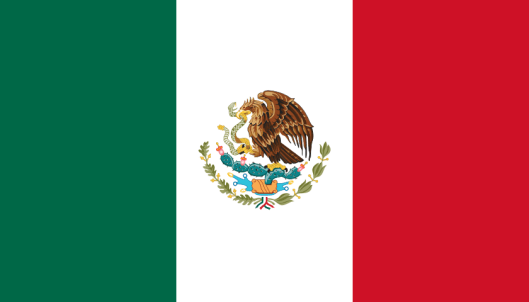
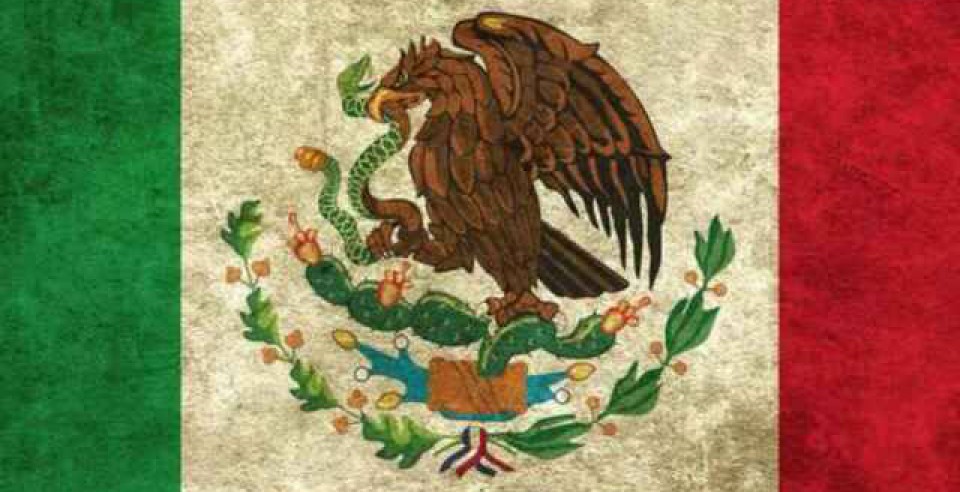
The Mexican flag has a similar connection to Balance and Harmony but first lets talk about the colors. The Green means “Hope”; the White means “Purity”; the Red means “The Blood of the Heroes” who have given their lives for Mexico. The Eagle & the Snake are a symbol that that Gods asked the Aztec People to find in nature. Once they found this symbol the Aztecs (also known as Mexica People) must start constructing their city there. And so they did, they found the Eagle & the Snake fighting on an Island in Lake Texcoco in 1325 so they build their capital there and called it Tenochtitlan (which means the “Land of Cactus”). When the Spanish conquerors arrived in 1521 they destroyed Tenochtitlan and over its ruins created Mexico City.

For many indigenous people in Mexico, the battle between the Eagle and the Snake represents a balance between Heaven and Earth. Eagles fly in Heaven so they represent Heaven and snakes dwell in the Earth so they represent Earth.

In Mexico, February 24th is “Flag’s Day”. Happy Celebrations!

Flag_of_South_Korea.svgESPAÑOL

A la bandera de Corea del Sur se le conoce como Taegukgi que significa “La Bandera de lo Absoluto”, símbolo que derivó del Taoísmo y posiblemente del chamanismo coreano (refiriéndose a las fuerzas del Yin y el Yang, los colores azul y rojo respectivamente).

A las líneas negras se les conoce como trigramas y representan las fuerzas de la naturaleza. El trigrama con 3 líneas representa el Cielo, el de 4 líneas representa el Fuego, el de 5 líneas representa el Agua y el de 6 líneas representa a la Tierra. En conjunto, el Taeguk  y los trigramas representan el balance y la armonía.

La bandera mexicana tiene una conexión similar con el balance y la armonía pero antes de entrar al tema hablaremos de sus colores. El verde significa la Esperanza, el blanco la Pureza y el rojo la Sangre derramada de los héroes nacionales que sacrificaron sus vidas por México.

El águila y la serpiente simbolizan la “Señal” que los dioses le dieron al pueblo Azteca para localizar el lugar donde deberían de fundar su capital. Y así fue, justo en el Lago de Texcoco los mexicas encontraron la señal en 1325 y ahí construyeron Tenochtitlán (que significa Tierra de Nopales). Poco después de la llegada de los conquistadores españoles en 1521 al Valle de México destruyeron Tenochtitlán y sobre sus ruinas construyeron la actual Ciudad de México.

Según algunos pueblos indígenas, la batalla entre el águila y la serpiente representa el balance entre el Cielo y la Tierra pues las águilas vuelan en el cielo mientras que las serpientes se arrastran sobre la tierra.

¡Celebremos hoy a nuestra bandera!

Newer posts →

Recent Posts

  • Acapulco and Merida Open…
  • Feliz Año del Caballo!
  • Mexico at Winter Olympics Milano
  • 2026 Earthquake in Mexico City
  • Light, light, light! Feliz Yalda, Janucá y Navidad 2025!

Recent Comments

Victor H. Garza 高山's avatarVictor H. Garza 高山 on Queen Elizabeth II visited Mex…
Cody G's avatarCody G on Multicultural Mexico: Indigeno…
Mel Rivera's avatarMel Rivera on September 15-16: Independence…
Joran Honig's avatarJoran Honig on Miss Mexico wins Miss Universe…
SoundEagle 🦅ೋღஜஇ's avatarSoundEagle 🦅ೋღஜஇ on Queen Elizabeth II visited Mex…

Archives

  • March 2026
  • February 2026
  • January 2026
  • December 2025
  • November 2025
  • October 2025
  • September 2025
  • August 2025
  • July 2025
  • June 2025
  • May 2025
  • April 2025
  • March 2025
  • February 2025
  • January 2025
  • December 2024
  • November 2024
  • October 2024
  • September 2024
  • August 2024
  • July 2024
  • June 2024
  • May 2024
  • April 2024
  • March 2024
  • February 2024
  • January 2024
  • December 2023
  • November 2023
  • October 2023
  • September 2023
  • August 2023
  • July 2023
  • June 2023
  • May 2023
  • April 2023
  • March 2023
  • February 2023
  • January 2023
  • December 2022
  • November 2022
  • October 2022
  • September 2022
  • August 2022
  • July 2022
  • June 2022
  • May 2022
  • April 2022
  • March 2022
  • February 2022
  • January 2022
  • December 2021
  • November 2021
  • October 2021
  • September 2021
  • August 2021
  • July 2021
  • June 2021
  • May 2021
  • April 2021
  • March 2021
  • February 2021
  • January 2021
  • December 2020
  • November 2020
  • October 2020
  • September 2020
  • August 2020
  • July 2020
  • June 2020
  • May 2020
  • April 2020
  • March 2020
  • February 2020
  • January 2020
  • December 2019
  • November 2019
  • October 2019
  • August 2019
  • July 2019
  • March 2019
  • February 2019
  • January 2019
  • December 2018
  • November 2018
  • October 2018
  • March 2018
  • June 2017
  • January 2017
  • December 2016
  • November 2016
  • October 2016
  • September 2016
  • August 2016
  • July 2016
  • June 2016
  • May 2016
  • April 2016
  • March 2016
  • February 2016

Categories

  • Arts & Entertainment
  • Culture
  • History
  • People
  • Politics
  • Religion
  • Science & Technology
  • Sin categoría
  • Sports
  • Travel
  • Trivia

Meta

  • Create account
  • Log in
  • Entries feed
  • Comments feed
  • WordPress.com

CONTÁCTANOS:

Monterrey, N.L.
MEXICO
multiculturalmexico@yahoo.com

Recent Posts

  • Acapulco and Merida Open…
  • Feliz Año del Caballo!
  • Mexico at Winter Olympics Milano
  • 2026 Earthquake in Mexico City
  • Light, light, light! Feliz Yalda, Janucá y Navidad 2025!

Recent Comments

Victor H. Garza 高山's avatarVictor H. Garza 高山 on Queen Elizabeth II visited Mex…
Cody G's avatarCody G on Multicultural Mexico: Indigeno…
Mel Rivera's avatarMel Rivera on September 15-16: Independence…
Joran Honig's avatarJoran Honig on Miss Mexico wins Miss Universe…
SoundEagle 🦅ೋღஜஇ's avatarSoundEagle 🦅ೋღஜஇ on Queen Elizabeth II visited Mex…

Archives

  • March 2026
  • February 2026
  • January 2026
  • December 2025
  • November 2025
  • October 2025
  • September 2025
  • August 2025
  • July 2025
  • June 2025
  • May 2025
  • April 2025
  • March 2025
  • February 2025
  • January 2025
  • December 2024
  • November 2024
  • October 2024
  • September 2024
  • August 2024
  • July 2024
  • June 2024
  • May 2024
  • April 2024
  • March 2024
  • February 2024
  • January 2024
  • December 2023
  • November 2023
  • October 2023
  • September 2023
  • August 2023
  • July 2023
  • June 2023
  • May 2023
  • April 2023
  • March 2023
  • February 2023
  • January 2023
  • December 2022
  • November 2022
  • October 2022
  • September 2022
  • August 2022
  • July 2022
  • June 2022
  • May 2022
  • April 2022
  • March 2022
  • February 2022
  • January 2022
  • December 2021
  • November 2021
  • October 2021
  • September 2021
  • August 2021
  • July 2021
  • June 2021
  • May 2021
  • April 2021
  • March 2021
  • February 2021
  • January 2021
  • December 2020
  • November 2020
  • October 2020
  • September 2020
  • August 2020
  • July 2020
  • June 2020
  • May 2020
  • April 2020
  • March 2020
  • February 2020
  • January 2020
  • December 2019
  • November 2019
  • October 2019
  • August 2019
  • July 2019
  • March 2019
  • February 2019
  • January 2019
  • December 2018
  • November 2018
  • October 2018
  • March 2018
  • June 2017
  • January 2017
  • December 2016
  • November 2016
  • October 2016
  • September 2016
  • August 2016
  • July 2016
  • June 2016
  • May 2016
  • April 2016
  • March 2016
  • February 2016

Categories

  • Arts & Entertainment
  • Culture
  • History
  • People
  • Politics
  • Religion
  • Science & Technology
  • Sin categoría
  • Sports
  • Travel
  • Trivia

Meta

  • Create account
  • Log in
  • Entries feed
  • Comments feed
  • WordPress.com

Blog at WordPress.com.

Privacy & Cookies: This site uses cookies. By continuing to use this website, you agree to their use.
To find out more, including how to control cookies, see here: Cookie Policy
  • Subscribe Subscribed
    • Multicultural Mexico
    • Join 25 other subscribers
    • Already have a WordPress.com account? Log in now.
    • Multicultural Mexico
    • Subscribe Subscribed
    • Sign up
    • Log in
    • Report this content
    • View site in Reader
    • Manage subscriptions
    • Collapse this bar
 

Loading Comments...